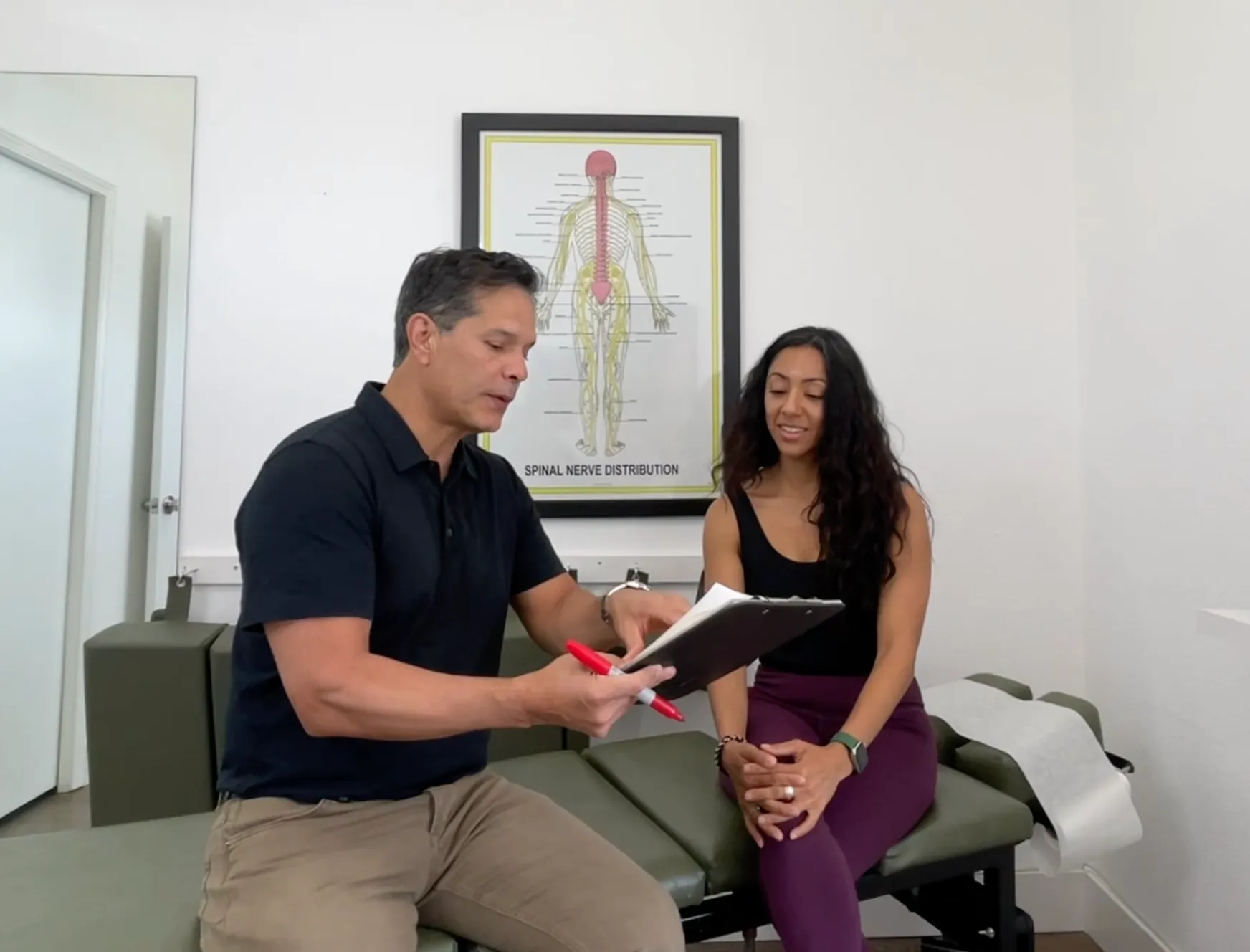
It is a pattern we see often at Espinoza Chiropractic: a patient was in a car accident on one of Austin’s busy corridors, like I-35 or MoPac, months ago. They felt shaken up at the time but were told the damage looked minor. Now, weeks or months later, they are still dealing with neck stiffness, headaches, or a nagging ache between the shoulder blades, and they are wondering why it has not gone away on its own.
If this sounds familiar, you are not imagining it, and you are not alone. Here is why whiplash and related soft tissue injuries can linger far longer than people expect.
Why the Timeline Catches People Off Guard
Whiplash happens when the head is snapped rapidly forward and backward, most often during a rear-end collision, straining the muscles, ligaments, and joints of the neck beyond their normal range. In the immediate aftermath, adrenaline and the shock of the accident can mask how significant the strain actually was. Many people feel “okay” for the first day or two, only to develop stiffness, pain, and reduced range of motion over the following days as inflammation sets in.
The problem is that once the acute inflammation settles, the underlying joint and soft tissue damage does not automatically resolve. If the small joints in the cervical spine were jarred out of their normal alignment during the impact, they can remain restricted long after the initial soreness fades, and that ongoing restriction is often what drives lingering pain weeks or months later.
Common Reasons Symptoms Persist
Untreated Joint Restriction
The facet joints in your neck can lose normal motion after a whiplash injury without showing up on a standard X-ray, which typically screens for fractures rather than subtle joint mechanics. This kind of restriction does not heal with rest alone. It needs to be identified and addressed directly.
Muscle Guarding and Compensation
After an accident, the muscles around an injured area often tighten protectively, a response called muscle guarding. Over time, this guarding can become a chronic pattern even after the original injury has started to heal, creating a cycle of tension and pain that persists independent of the initial trauma.
Delayed or Incomplete Initial Treatment
Patients who were told their injury was “minor” and did not pursue evaluation often miss the window where early, targeted care makes the biggest difference. The body adapts to a misalignment or restriction the longer it goes unaddressed, which can make the eventual correction take longer.
Underlying Disc Involvement
In some cases, the forces involved in a collision can affect the discs between vertebrae, contributing to symptoms like radiating arm pain, numbness, or tingling that may not appear until weeks after the accident, as inflammation and compensatory movement patterns develop.
What This Means for Your Recovery
If you are still dealing with neck pain, headaches, upper back tension, or stiffness months after an accident, it does not mean you are stuck with it. It usually means the underlying mechanical issue, whether that is joint restriction, muscle guarding, or auto accident injuries affecting the surrounding soft tissue, has not yet been directly addressed.
Our auto accident treatment approach starts with a full evaluation of your cervical and thoracic spine to identify exactly which joints have lost normal motion and which muscle groups are still guarding. From there, targeted adjustments and supportive care work to restore mobility and break the compensation cycle that has kept the pain going.
What Evaluation and Treatment Actually Looks Like
A thorough evaluation for lingering post-accident symptoms starts with a detailed history of the accident itself, including the direction of impact and how your symptoms have changed over time, followed by an assessment of range of motion, joint mobility, and muscular tension throughout the neck and upper back. This helps distinguish between restrictions that are still present versus symptoms that may be coming from a different source entirely.
Treatment typically involves a combination of targeted adjustments to restore motion to restricted joints, soft tissue work to address chronic muscle guarding, and a home program of gentle mobility exercises to reinforce the changes between visits. Most patients notice gradual improvement over several weeks, though the exact timeline depends on how long the restriction has been present and how significant the original injury was.
Documentation Still Matters
If your accident is recent enough that you are still working through insurance, keep in mind that a chiropractic evaluation also creates a documented record connecting your ongoing symptoms to the accident, which can matter for your claim even if you initially felt fine and did not seek care right away.
References
- National Highway Traffic Safety Administration, Whiplash Injury Data, nhtsa.gov
- American Chiropractic Association, Whiplash and Auto Injury Care, acatoday.org
Do Not Wait for It to Go Away
If you are still sore months after a car accident on Austin’s roads, it is worth having your spine properly evaluated rather than assuming it will resolve on its own. New patients receive a $97 first visit (a $297 value).
Call (512) 488-0786 or book your appointment online to get started.