Central Texas weather has a reputation for changing fast, a warm, humid day can give way to a sharp cold front within hours, and a lot of our migraine patients tell us they can feel a front coming before the forecast does. It is a common enough complaint that it is worth asking: is this a real physiological connection, or just a coincidence people notice because migraines are memorable?
The Actual Connection
Research on weather and migraines points most consistently to barometric pressure changes as a trigger, rather than temperature or humidity alone. When atmospheric pressure drops ahead of an incoming front, which is common with the fast-moving systems Austin sees, it can create a small pressure differential between the outside environment and the air-filled spaces in your sinuses and inner ear. For people prone to migraines, this shift appears to be enough to trigger the cascade of vascular and neurological changes involved in a migraine attack.
It is worth being clear that not everyone who gets headaches is weather-sensitive, and the research shows a real but individually variable link rather than a universal rule. If you consistently notice a pattern between fronts moving through and your headaches starting, that is a meaningful signal about your particular sensitivity, even if the broader research shows mixed results across the general population.
Why This Matters for Austin Specifically
Austin’s position in Central Texas means it experiences frequent frontal boundary passages, particularly in spring and fall, as cold fronts from the north collide with warm, humid Gulf air. This creates more frequent pressure swings than a lot of other regions experience, which may be part of why so many local patients report weather sensitivity.
The Piece That Often Gets Missed: Neck Tension
Here is what is worth understanding: even when barometric pressure is the trigger, the muscles and joints of your neck often play a role in how severe and how long the resulting headache lasts. Weather-triggered vascular changes frequently combine with existing tension in the upper cervical spine and the muscles at the base of the skull, and that combination is often what turns a mild sensitivity into a full migraine.
This is part of why two people can experience the exact same pressure drop and have very different outcomes. Someone with good mobility and minimal tension in their upper neck may notice mild discomfort, while someone with restricted cervical joints and chronic tension in that area may develop a significant migraine from the same trigger.
How Chiropractic Care Fits Into Migraine Management
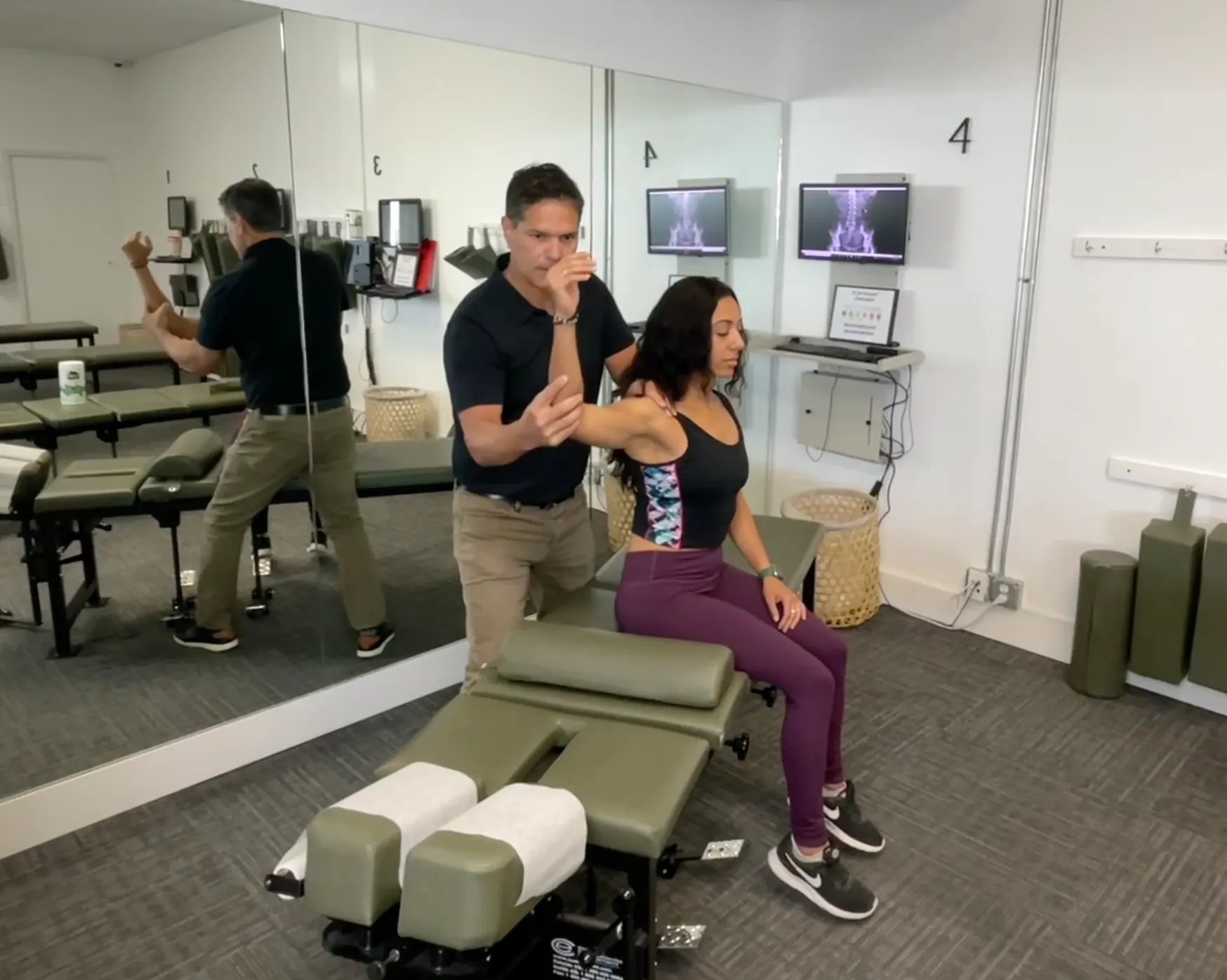
Our headache and migraine treatment approach focuses on identifying and addressing restrictions in the upper cervical spine and the surrounding musculature, which appears to reduce both the frequency and intensity of migraines for many patients, particularly those with a cervicogenic or tension-related component layered onto their headaches and migraines.
This does not mean chiropractic care controls the weather or eliminates weather sensitivity entirely. What it can do is reduce the baseline tension and joint restriction that often amplifies a weather-triggered migraine, potentially making individual episodes less severe or less frequent over time.
Practical Steps If You Are Weather-Sensitive
- Track your headaches alongside weather forecasts for a few weeks to see if a genuine pattern emerges for you specifically
- Stay well hydrated, particularly in the days leading up to a forecasted front, since dehydration can compound migraine risk
- Maintain consistent sleep timing, since sleep disruption is a separate, well-established migraine trigger that can stack with weather sensitivity
- Address neck tension proactively rather than only after a migraine has started
Why Some Patients Notice More Improvement Than Others
Patients who see the most improvement from combining chiropractic care with weather-related migraine management tend to be those whose headaches have a clear muscular or postural component alongside the weather trigger, for example a desk worker who already deals with neck tension who also happens to be weather-sensitive. For patients whose migraines are driven almost entirely by other factors, such as certain foods or hormonal changes, the weather connection may be a smaller piece of a larger puzzle, and addressing neck tension will help less on its own. A thorough intake conversation about your full migraine pattern, not just the weather piece, helps set realistic expectations for what care can and cannot address.
When to Seek a Fuller Evaluation
If weather-related migraines are happening frequently enough to disrupt your work or daily life, it is worth a combined approach: discussing management options with your physician and having your cervical spine evaluated for the mechanical component that may be amplifying your episodes.
References
- American Migraine Foundation, Weather and Migraine, americanmigrainefoundation.org
- National Institute of Neurological Disorders and Stroke, Headache Information Page, ninds.nih.gov
Manage Your Migraines More Effectively
If weather changes seem to trigger your migraines, Espinoza Chiropractic can evaluate whether neck tension is amplifying your episodes. New patients receive a $97 first visit (a $297 value).
Call (512) 488-0786 or book your appointment online today.