One of the most common questions we hear from Austin athletes, whether they play in a weekend rec league, train for a race, or compete in school sports, is some version of “how long until I am back to normal?” It is a fair question, and unfortunately it does not have a single answer. Recovery timelines depend heavily on the type of injury, its severity, and how it is managed in the early days after it happens.
Here is a realistic breakdown of what recovery typically looks like for the sports injuries we see most often, along with where chiropractic care fits into the process.
Why There Is No Universal Timeline
Every injury involves different tissues, and different tissues heal at different rates. A minor muscle strain and a ligament sprain might feel similar in the moment, but the underlying healing biology is not the same, and neither is the risk of returning to activity too soon.
Severity also matters more than most people expect. A grade 1 sprain (mild stretching of the ligament) and a grade 3 sprain (a complete tear) can involve the exact same joint and mechanism of injury, yet the recovery timelines are weeks apart.
Typical Recovery Windows by Injury Type
Muscle Strains
Mild strains, where the muscle is overstretched but not torn, often improve within one to two weeks with rest, gentle movement, and supportive care. Moderate strains involving partial tearing typically take four to six weeks. Severe strains with significant tearing can take two to three months and sometimes longer, depending on which muscle group is involved.
Ligament Sprains
Ankle and knee sprains are among the most common injuries we see in Austin’s running, soccer, and youth sports community. Mild sprains generally resolve in one to three weeks. Moderate sprains often take four to eight weeks, especially in weight-bearing joints. Severe sprains, particularly full ligament tears, can require several months and sometimes surgical consultation.
Joint and Spinal Misalignment From Impact
Contact sports and falls can jar the spine and surrounding joints out of their normal position without causing a visible injury like a fracture. This type of misalignment does not always resolve on its own the way a bruise does. Left unaddressed, it can create ongoing stiffness, uneven movement patterns, and a higher risk of re-injury, which is why a structural evaluation after any significant impact is worth doing even if nothing seems obviously wrong.
Overuse Injuries
Injuries like tendinitis or repetitive strain in runners and swimmers tend to have the least predictable timeline because they develop gradually and often stem from a training or mechanical issue that has to be corrected, not just rested. Recovery can range from a few weeks to a few months depending on how early the underlying cause is identified.
Factors That Speed Up or Slow Down Recovery
- Early management. Athletes who get evaluated and start appropriate care in the first 48 to 72 hours typically recover faster than those who wait and hope it resolves on its own.
- Following the plan. Returning to activity too early is one of the most common reasons a healing injury turns into a chronic one.
- Addressing the whole kinetic chain, not just the injury site. A hip or spinal misalignment can slow the recovery of a knee or ankle injury by changing how load moves through the body.
- Age and baseline conditioning. Well-conditioned athletes generally heal faster, though this varies by individual.
Where Chiropractic Care Fits Into Recovery
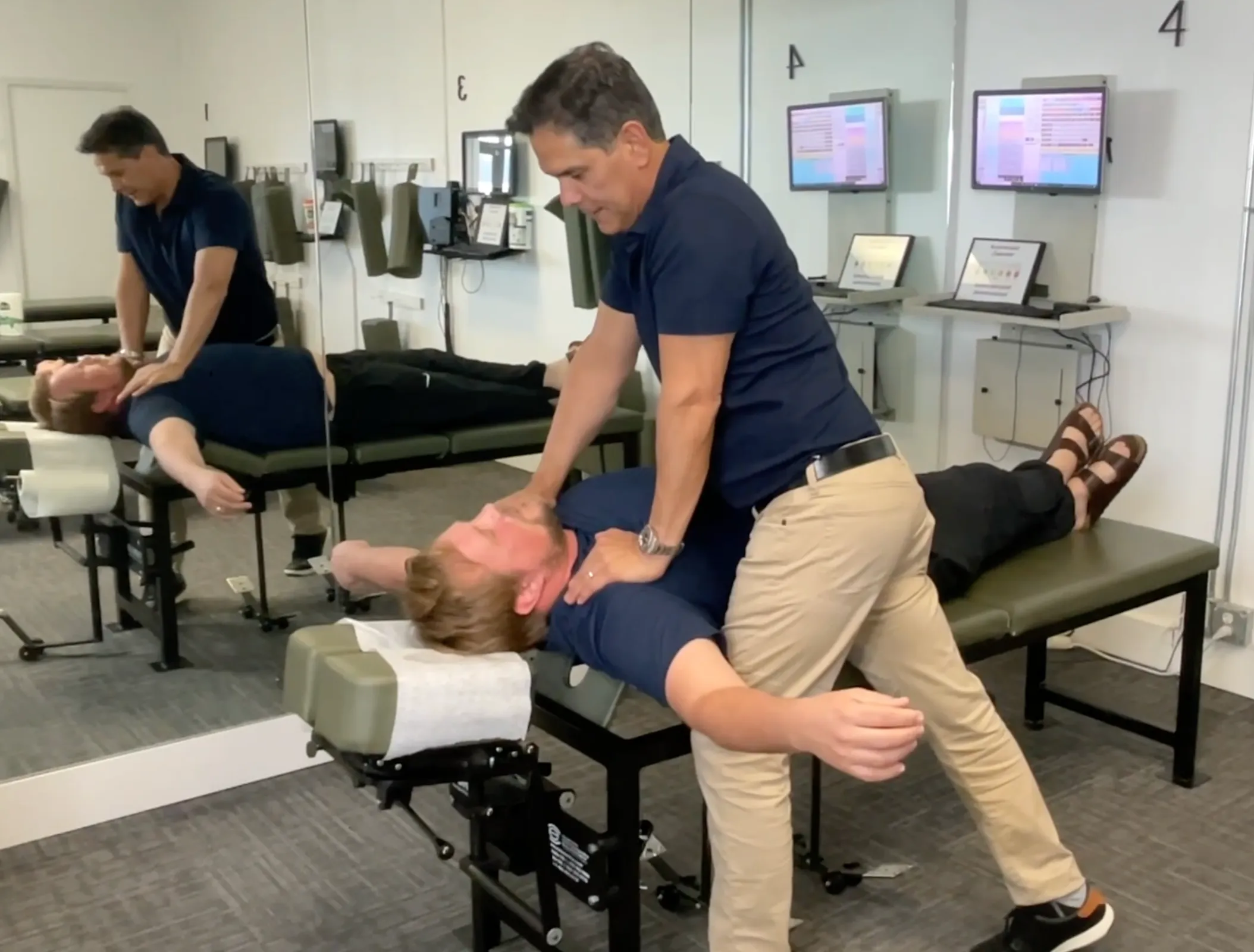
Our sports injury treatment approach focuses on restoring proper joint mechanics and movement patterns, not just treating the site of pain in isolation. When an athlete comes in after an injury, we evaluate the entire kinetic chain, because a restriction in the hip or spine can quietly slow the healing of an ankle or shoulder injury by changing how the body compensates during daily movement.
For sports injuries specifically, chiropractic adjustments can help restore normal joint motion around the injured area, which supports better circulation and reduces the compensatory strain that often develops as athletes unconsciously favor the injured side.
A Realistic Approach to “When Can I Play Again?”
Rather than fixating on a fixed number of days, we look at function: Can you move through a full range of motion without pain? Can you perform sport-specific movements at game speed without hesitation? Has strength returned to match the uninjured side? These functional markers are more reliable than the calendar, and they are what we track with every athlete we see.
References
- American Academy of Orthopaedic Surgeons, Sports Injury Prevention, orthoinfo.aaos.org
- National Athletic Trainers’ Association, Injury and Recovery Resources, nata.org
Get Back in the Game Safely
If you or your young athlete has a sports injury and you are not sure how to gauge recovery, Espinoza Chiropractic can evaluate the injury and build a realistic recovery plan. New patients get a $97 first visit (a $297 value) for a full evaluation.
Call (512) 488-0786 or book your appointment online to get started.