If you commute regularly on I-35 or MoPac, you already know Austin traffic can turn a 20-minute drive into an hour of stop-and-go sitting. For most people that is simply frustrating. For anyone dealing with sciatica, it can make the pain measurably worse.
Why Sitting Aggravates Sciatica
Sciatica refers to pain that radiates along the path of the sciatic nerve, usually from the lower back through the hip and down one leg. It is most often caused by compression or irritation of the nerve roots in the lower spine, frequently from a herniated disc or a tight piriformis muscle pressing on the nerve.
Sitting is one of the worst positions for this condition because it increases pressure on the lumbar discs and can compress the piriformis muscle directly against the nerve, especially in a car seat that does not properly support the lower back. A long commute stacks this compression on top of whatever underlying issue is already irritating the nerve, which is why many patients notice their sciatica is worse on heavy-traffic days.
Signs Your Commute Is Making It Worse
- Numbness or tingling that develops partway through a long drive and lingers afterward
- Needing to shift position repeatedly to find relief while sitting in traffic
- Pain that radiates further down the leg the longer you are seated
- Stiffness getting out of the car that takes several minutes to work through
If this sounds familiar, it points to the same nerve compression pattern behind sciatica more broadly, just triggered specifically by prolonged sitting.
Adjustments You Can Make Right Now
- Use a firm lumbar cushion positioned in the curve of your lower back, not just anywhere on the seatback
- Slightly recline the seat back, around 100 to 110 degrees, rather than sitting bolt upright, which reduces disc pressure
- Sit on a wallet or anything in your back pocket — remove it before driving, since it tilts the pelvis and can worsen piriformis compression
- During heavy traffic stops, shift your weight side to side or do a gentle seated pelvic tilt
Non-Invasive Relief That Actually Addresses the Cause
Over-the-counter pain relievers can mute the symptom temporarily, but they do nothing for the underlying nerve compression, and heavy reliance on them is not a long-term plan. Chiropractic care for sciatica focuses on identifying and correcting the specific spinal or muscular cause of the compression, whether that is a disc issue, a misaligned vertebra, or piriformis tightness.
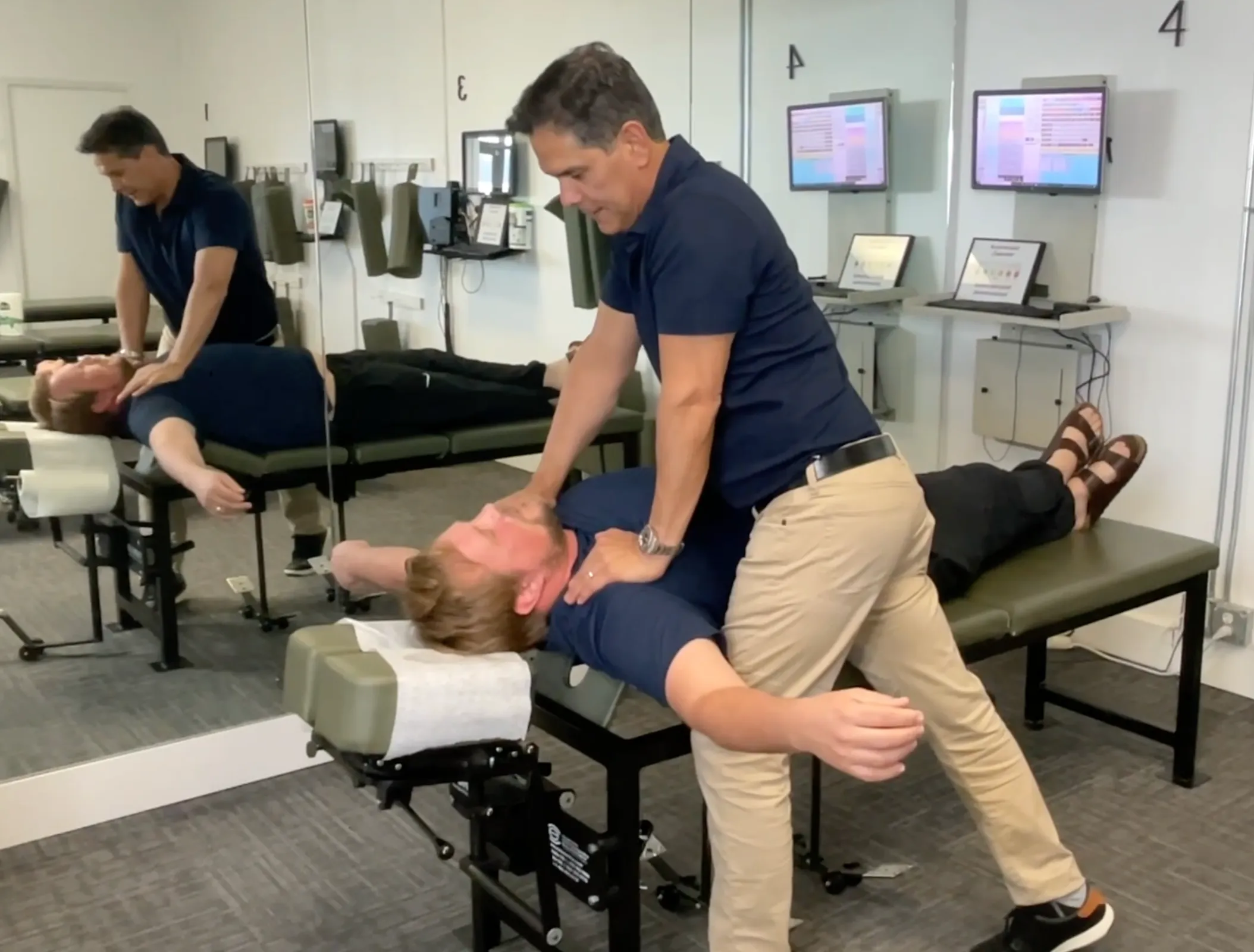
Our sciatica treatment approach combines spinal adjustment with targeted soft tissue work to relieve the nerve compression directly, rather than just managing the pain it causes.
Do Not Wait Out a Long-Commute Flare-Up
Sciatica that is aggravated by sitting tends to get worse the longer it goes unaddressed, since the irritated nerve stays under repeated stress every workday. Getting evaluated early, before symptoms progress further down the leg, generally means a faster and more complete recovery.
New patients can get their first visit for $97 (a $297 value) that includes a full evaluation. Claim the offer or book an appointment at our North or South Austin office and stop letting your commute dictate your pain level.
References:
- National Institute of Neurological Disorders and Stroke, sciatica overview — ninds.nih.gov
- Mayo Clinic, sciatica causes and risk factors — mayoclinic.org