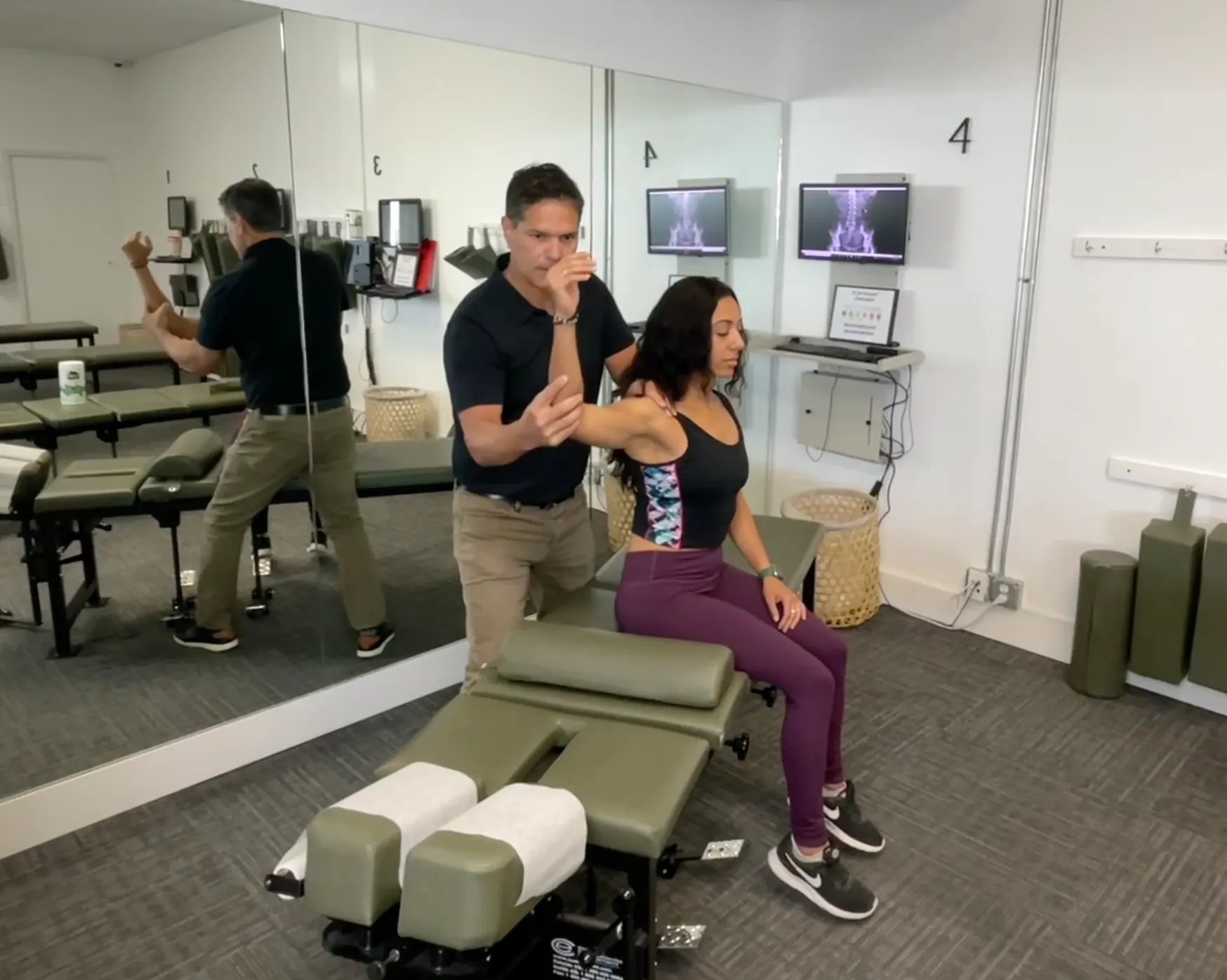
In a city like Austin, where tech jobs, remote work, and long hours at a desk are common, neck pain has quietly become one of the most frequent complaints among professionals. If you spend most of your day in front of a computer or checking your phone, you may already be noticing early signs of what is often called “tech neck.”
This is more than occasional stiffness. It is a growing problem that can affect posture, productivity, and long-term spinal health if left unaddressed.
What Is Tech Neck and Why Austin Workers Are at Risk
Tech neck refers to the strain and discomfort caused by repeatedly tilting your head forward while using screens like laptops, smartphones, and tablets. While this posture may feel natural, it places meaningful stress on your neck and upper spine.
The average adult head weighs roughly 10 to 12 pounds, and the pressure on the neck can increase substantially when tilted forward, placing added strain on muscles and joints. For Austin desk workers, the risk is higher still. Many professionals spend eight or more hours daily on computers, followed by additional screen time at home. This constant strain can contribute to muscle fatigue, spinal misalignment, and ongoing discomfort over time.
The Real Causes Behind Screen-Related Neck Pain
Neck pain from screen time does not happen overnight. It develops gradually through repeated habits and poor ergonomics. One of the biggest causes is prolonged static posture. When you sit at a desk for hours without moving, your muscles are forced to work harder to support your head and maintain balance.
Another major factor is forward head posture, which happens when your head drifts in front of your shoulders while looking at a screen. Over time, this misalignment places uneven pressure on your spine and surrounding muscles.
Workstation setup matters too. Screens positioned too low, chairs without proper support, and improper keyboard placement all contribute to poor posture and increased strain.
Common Symptoms You Shouldn’t Ignore
What makes tech neck concerning is how subtle the symptoms can be at first. Many Austin professionals dismiss early warning signs until the discomfort becomes more persistent.
Neck pain caused by screen time often presents as stiffness, soreness, or a dull ache that worsens throughout the day. You may also notice headaches, reduced range of motion, or tightness in your shoulders.
In more advanced cases, discomfort can radiate into the arms or hands due to nerve irritation, leading to tingling, numbness, or weakness, signs that your spine is under stress. Left unaddressed, these symptoms can become recurring.
How Screen Time Impacts Your Spine Long-Term
While occasional neck pain may seem minor, repeated strain can contribute to more significant issues over time. Poor posture and prolonged screen use can accelerate wear on spinal joints, increasing the risk of conditions like disc degeneration or nerve compression.
Tech neck does not just affect your neck, it can also contribute to upper back pain, headaches, and reduced mobility. The longer the issue goes unaddressed, the more it can affect posture and daily quality of life, including productivity and sleep.
Simple Changes That Make a Big Difference
Tech neck is largely preventable with the right habits. Improving your posture is the first step: keeping your head aligned over your shoulders and your screen at eye level can meaningfully reduce strain.
Taking regular breaks matters too. Sitting in one position for long periods increases fatigue and stress on your neck, and even short movement breaks throughout the day can help reset posture.
Your workstation setup also plays a role. A properly positioned monitor, supportive chair, and ergonomic keyboard placement can meaningfully improve comfort and reduce long-term risk.
When to See a Chiropractor for Neck Pain
While lifestyle changes can help, persistent or worsening symptoms often warrant professional evaluation. If your neck pain lasts for several days, limits your movement, or radiates into your arms, it is worth seeking care. These signs may indicate deeper spinal issues that need proper evaluation.
Chiropractic care focuses on supporting proper alignment, reducing tension, and improving mobility, addressing the underlying cause of tech neck rather than only the symptoms.
Why Chiropractic Care Is a Smart Option for Austin Professionals
Chiropractic adjustments are designed to help correct spinal misalignment caused by poor posture and repetitive strain. By supporting alignment, they help relieve pressure on nerves and reduce inflammation. Chiropractors also often provide posture guidance, ergonomic recommendations, and targeted exercises to support long-term recovery.
For professionals who rely on staying productive, this proactive approach can make a meaningful difference in comfort and performance.
Take Control of Your Neck Health Today
Neck pain from screen time is no longer an occasional inconvenience, it is a common issue affecting many Austin desk workers. The key to preventing long-term strain is early action. By improving your posture, adjusting your workspace, and seeking professional care when needed, you can support your spine and maintain a more comfortable daily routine.
If you are already experiencing symptoms, do not wait for them to worsen. Schedule a visit with Espinoza Chiropractic in Austin today.