“I think I have sciatica” and “I think I have a herniated disc” are two phrases we hear constantly from patients describing pain that radiates from the low back down the leg. The terms get used almost interchangeably in everyday conversation, but they actually describe two different things: one is a symptom, and the other is a structural cause. Understanding the difference helps clarify what is actually happening and how it should be evaluated.
Sciatica Is a Symptom, Not a Diagnosis
Sciatica refers to pain that travels along the path of the sciatic nerve, which runs from the lower back through the hip and buttock and down the back of the leg. It describes what you feel, not why you feel it. Sciatica is a description of symptoms: pain, tingling, numbness, or weakness that follows this nerve pathway, often on one side of the body.
Because sciatica is a symptom rather than a root cause, the real question is always what is irritating the sciatic nerve in the first place. That is where a herniated disc, among other things, comes in.
A Herniated Disc Is a Structural Cause
Your spine’s vertebrae are cushioned by discs made of a tough outer layer surrounding a gel-like center. A herniated disc occurs when that outer layer weakens or tears, allowing the inner material to bulge or push outward. When a disc herniates in the lower back near where the sciatic nerve roots exit the spine, it can press directly on the nerve, producing the radiating pain, numbness, or tingling we call sciatica.
Importantly, a herniated disc is only one of several possible causes of sciatic-type symptoms. Others include:
- Spinal stenosis: a narrowing of the spinal canal that puts pressure on nerve roots
- Piriformis syndrome: irritation of the sciatic nerve from a tight piriformis muscle deep in the buttock, unrelated to the disc itself
- Facet joint irritation: inflammation or misalignment in the small joints of the spine that can refer pain along a similar pathway
- Sacroiliac joint dysfunction: issues in the joint connecting the spine to the pelvis, which can mimic sciatic symptoms
This is exactly why an accurate evaluation matters. Two patients can both describe “sciatica,” yet have entirely different underlying causes that require different treatment approaches.
How the Two Conditions Are Told Apart
A proper evaluation for radiating leg pain typically includes orthopedic and neurological testing to assess reflexes, muscle strength, and specific nerve tension signs, along with a detailed history of when the pain started and what movements make it better or worse. Pain that worsens with sitting or forward bending often points toward disc involvement, while pain that worsens with specific hip rotation may point more toward a muscular cause like piriformis irritation. In some cases, imaging is used to confirm a disc herniation directly.
How Treatment Differs
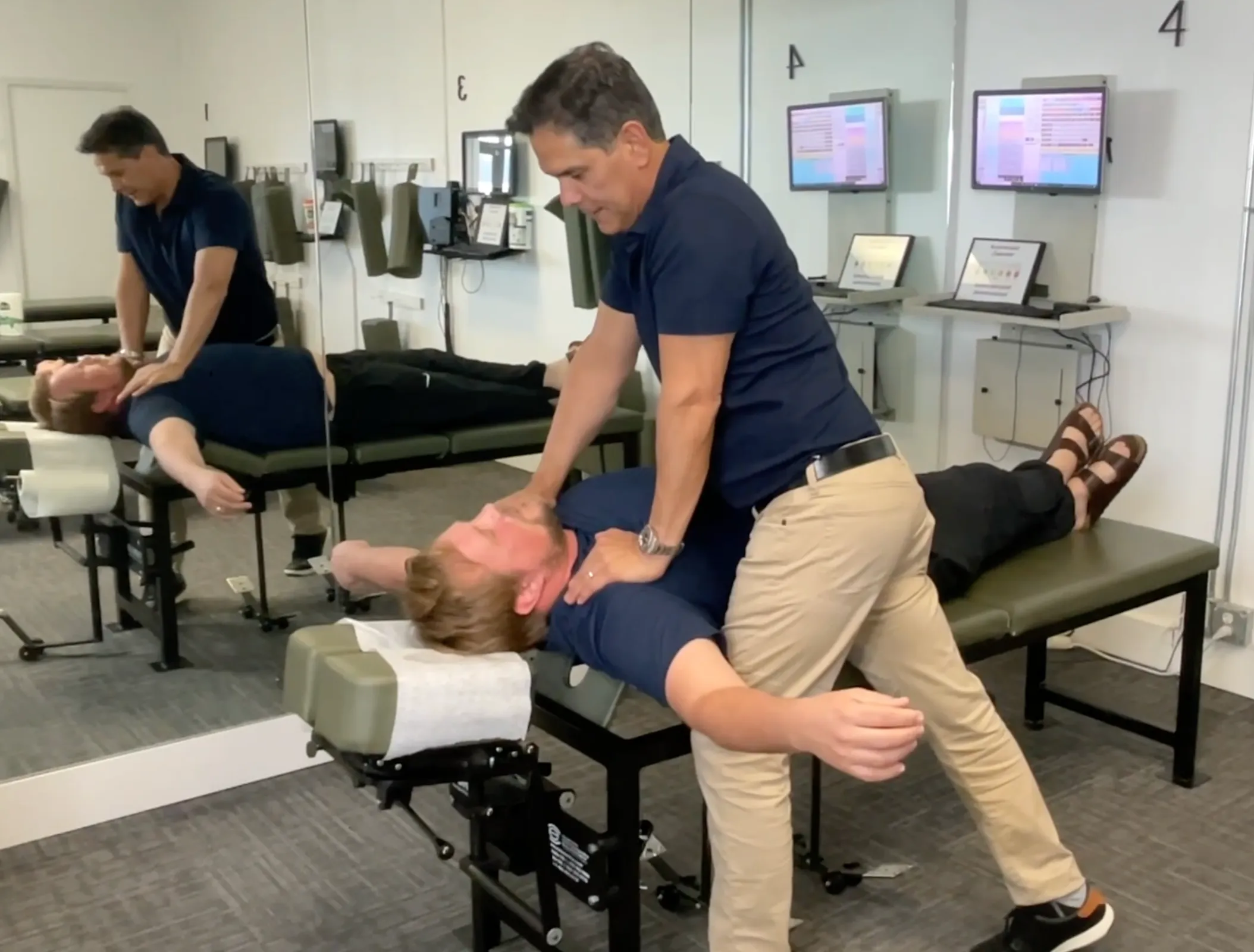
For sciatic symptoms caused by a herniated disc, care typically focuses on reducing pressure on the affected nerve root through targeted spinal adjustments, positioning strategies, and flexion-distraction techniques designed specifically to create space around the disc rather than compress it further.
For sciatica stemming from a muscular or joint-related cause, treatment instead focuses on restoring proper joint mechanics or releasing the muscle that is irritating the nerve, which is a meaningfully different approach than disc-focused care.
This is why our sciatica treatment approach always starts with identifying the actual source of the nerve irritation rather than treating “sciatica” as a single, generic condition. Getting the underlying cause right changes what the right treatment plan looks like.
What a First Visit for Radiating Leg Pain Involves
If you come in with symptoms that follow the sciatic pathway, the evaluation typically starts with a conversation about exactly where the pain travels, what movements make it better or worse, and whether you have noticed any numbness, tingling, or weakness alongside the pain. From there, a combination of orthopedic tests, such as a straight leg raise, and neurological screening of reflexes and strength helps narrow down where along the nerve pathway the irritation is likely coming from.
This structured approach is what allows us to build a treatment plan around your actual source of symptoms, rather than applying a generic protocol to anyone who describes radiating leg pain. Two patients with the same complaint can walk out with meaningfully different care plans once the underlying cause is identified.
When to Get It Evaluated
If you are experiencing pain, numbness, or tingling that radiates from your low back into your leg, especially if it is affecting your daily activity or worsening over time, it is worth getting a proper evaluation rather than guessing at the cause. The right treatment depends entirely on correctly identifying what is actually irritating the nerve.
References
- National Institute of Neurological Disorders and Stroke, Sciatica Information, ninds.nih.gov
- American Association of Neurological Surgeons, Herniated Disc Overview, aans.org
Get an Accurate Diagnosis
If you are dealing with radiating leg pain and want to know exactly what is causing it, Espinoza Chiropractic offers a full evaluation to identify the true source. New patients receive a $97 first visit (a $297 value).
Call (512) 488-0786 or book your appointment online to get started.