Austin’s dense concentration of tech and office jobs means a lot of hands spend the entire day on a keyboard and mouse. When wrist or hand numbness starts showing up, most people’s first guess is carpal tunnel syndrome. Sometimes that is exactly right — but not always, and the distinction matters for how it gets treated.
What Carpal Tunnel Actually Is
Carpal tunnel syndrome occurs when the median nerve, which runs from the forearm into the hand through a narrow passage in the wrist called the carpal tunnel, becomes compressed. Repetitive wrist motion and sustained awkward wrist positions — exactly what heavy keyboard and mouse use can create — are well-documented contributing factors.
Typical carpal tunnel symptoms include:
- Numbness or tingling in the thumb, index, middle, and part of the ring finger
- Symptoms that are often worse at night or first thing in the morning
- Weakness or a tendency to drop objects
- A sensation of swelling in the fingers, even when no visible swelling is present
When It Might Not Be Carpal Tunnel
Not every case of hand numbness in a desk worker is true carpal tunnel syndrome. Nerve compression in the neck, particularly involving the lower cervical spine, can produce very similar numbness and tingling that radiates down the arm into the hand. This is sometimes mistaken for carpal tunnel because the symptom location overlaps, even though the source is entirely different.
This overlap is one of the reasons a proper evaluation matters before assuming the wrist is the only problem. A pattern that involves the entire arm, or that changes with neck position, points more toward a cervical issue related to conditions like carpal tunnel that actually originate higher up the nerve pathway.
Reducing Strain at Your Desk
- Keep wrists straight and neutral while typing, not bent up, down, or to the side
- Position your keyboard and mouse at elbow height so your wrists do not have to compensate
- Use a light touch on the keys rather than pounding them
- Take short breaks every 30 to 45 minutes to shake out and stretch the hands and wrists
- Try gentle wrist flexor and extensor stretches: extend the arm, gently pull the fingers back with the other hand, hold 20 to 30 seconds
How Chiropractic and Electrotherapy Help
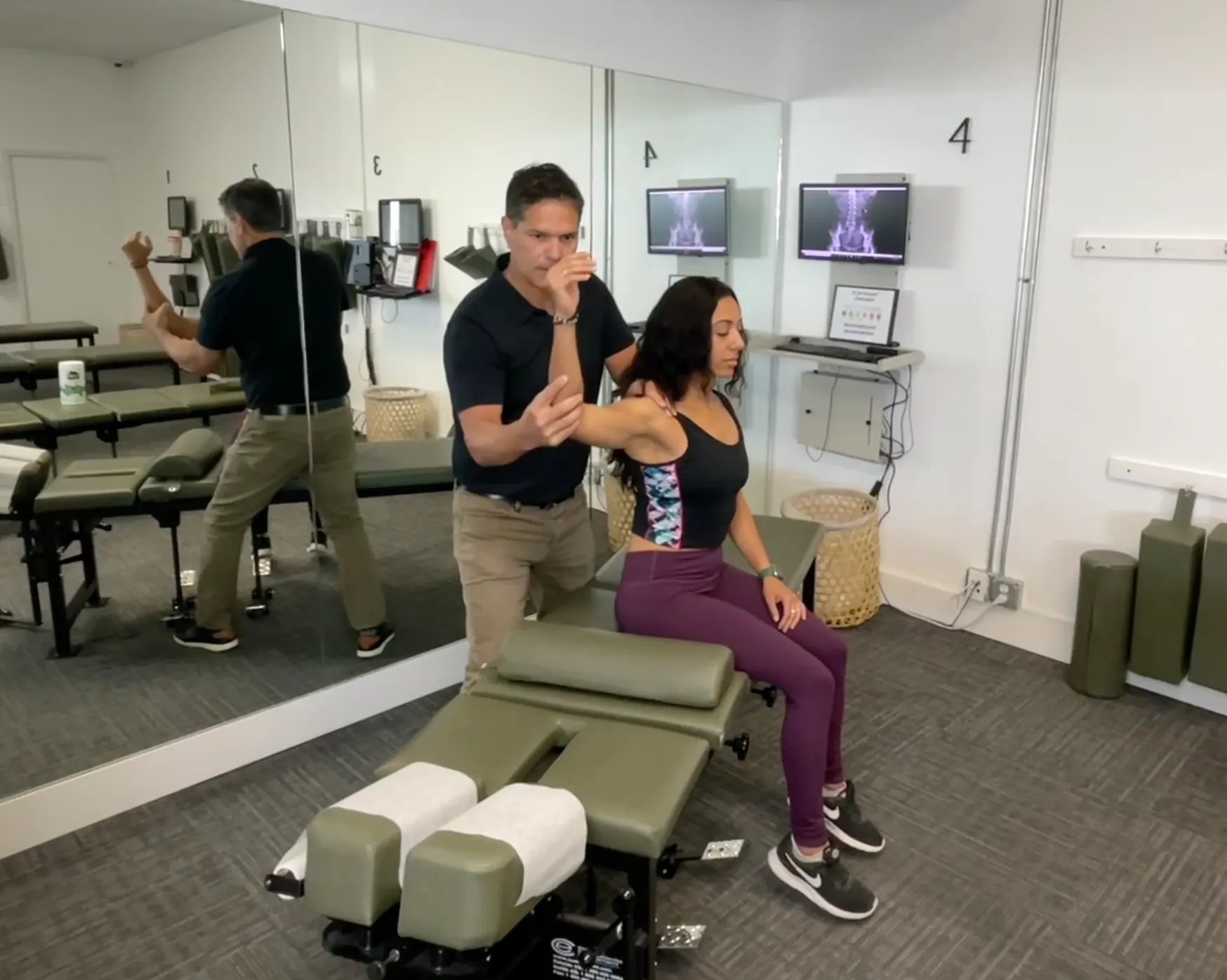
Chiropractic evaluation identifies where along the nerve pathway — wrist, forearm, or neck — the compression is actually occurring, rather than assuming it is automatically carpal tunnel. Once the source is identified, treatment can include adjustment to relieve nerve compression at the neck if that is contributing, combined with electrotherapy to reduce inflammation and support nerve and soft tissue recovery in the wrist and forearm.
This combined approach addresses the mechanical cause of the compression rather than only masking the numbness with rest or bracing alone.
Do Not Ignore Ongoing Numbness
Nerve compression that goes unaddressed can worsen over time and, in more advanced cases, lead to lasting weakness. If numbness or tingling is becoming a regular occurrence, especially if it is affecting your sleep or your grip strength, it is worth getting evaluated rather than waiting to see if it resolves on its own.
New patients can get their first visit for $97 (a $297 value) that includes a full evaluation. Claim the offer or book an appointment at our North or South Austin office.
References:
- National Institute of Neurological Disorders and Stroke, carpal tunnel syndrome fact sheet — ninds.nih.gov
- Mayo Clinic, carpal tunnel syndrome overview — mayoclinic.org