A few months into the school year, Austin parents start bringing their kids in with a similar concern: rounded shoulders, complaints of back or neck discomfort after school, or a visible lean to one side while walking. By November, backpack habits that started out fine in August have often slipped — more books, more gear, and less attention to how the bag is worn. More often than expected, the cause is sitting right there on their child’s back.
A backpack loaded beyond a safe weight, worn incorrectly, or carried on one shoulder can meaningfully affect a growing child’s posture. Because a child’s spine and muscles are still developing, the effects of chronic overloading show up faster and matter more than they would for an adult.
How Much Weight Is Too Much
The general guideline pediatric health organizations recommend is that a backpack should weigh no more than about 10 to 15 percent of a child’s body weight. For a 60-pound elementary schooler, that is roughly 6 to 9 pounds — far less than a bag stuffed with a laptop, multiple textbooks, and a full lunch and water bottle often weighs.
When a pack exceeds that range, kids compensate by leaning forward, arching the back, or shifting the load to one shoulder, all of which pull the spine out of its natural alignment over time.
Signs the Backpack Is a Problem
- Red marks or grooves on the shoulders after wearing it
- Leaning forward noticeably to counterbalance the weight
- Consistently carrying the bag on one shoulder to avoid discomfort
- Complaints of shoulder, neck, or back tightness after school
- Tingling or numbness in the arms
These signs point toward the same kind of poor posture patterns we regularly treat in adults, except a child’s developing spine is more sensitive to sustained asymmetric loading.
Choosing and Packing a Backpack the Right Way
- Choose a pack with wide, padded straps and a padded back panel, not thin straps that dig in
- Use both straps every time, positioned so the bag sits close to the body, not sagging below the waist
- Pack heavier items closest to the back, not at the bottom or in outer pockets
- Use a rolling backpack if the school allows it and your child struggles with weight despite these adjustments
- Have your child carry only what is needed for the day rather than an entire locker’s worth of books
When to Get a Posture Check
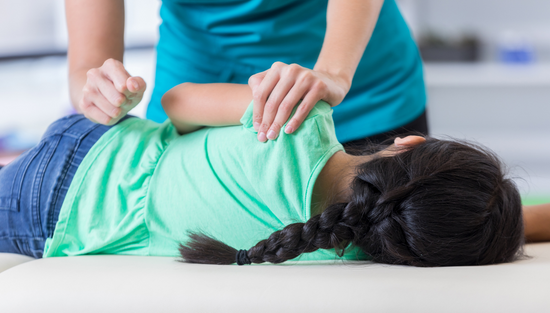
If your child has already developed the compensations above — a forward lean, one-shoulder carrying, or recurring complaints of tightness — a backpack swap alone may not fully correct the pattern that has already developed. A pediatric evaluation can determine whether their spine has adapted to the imbalance and needs guided correction.
Our pediatric chiropractic care is focused on gentle, age-appropriate assessment and adjustment to support healthy posture and spinal development through the school years.
Make It Part of Your Fall Routine
Before the semester gets busier heading into winter break, consider a quick posture and spine check for your child, especially if they already show any of the warning signs above.
New patients can currently get their first visit for $97 (a $297 value). Claim the offer or book an appointment at our North or South Austin office to get your child checked before the habits set in for the rest of the year.
References:
- American Academy of Pediatrics, backpack safety guidelines — healthychildren.org
- American Chiropractic Association, backpack weight recommendations — acatoday.org